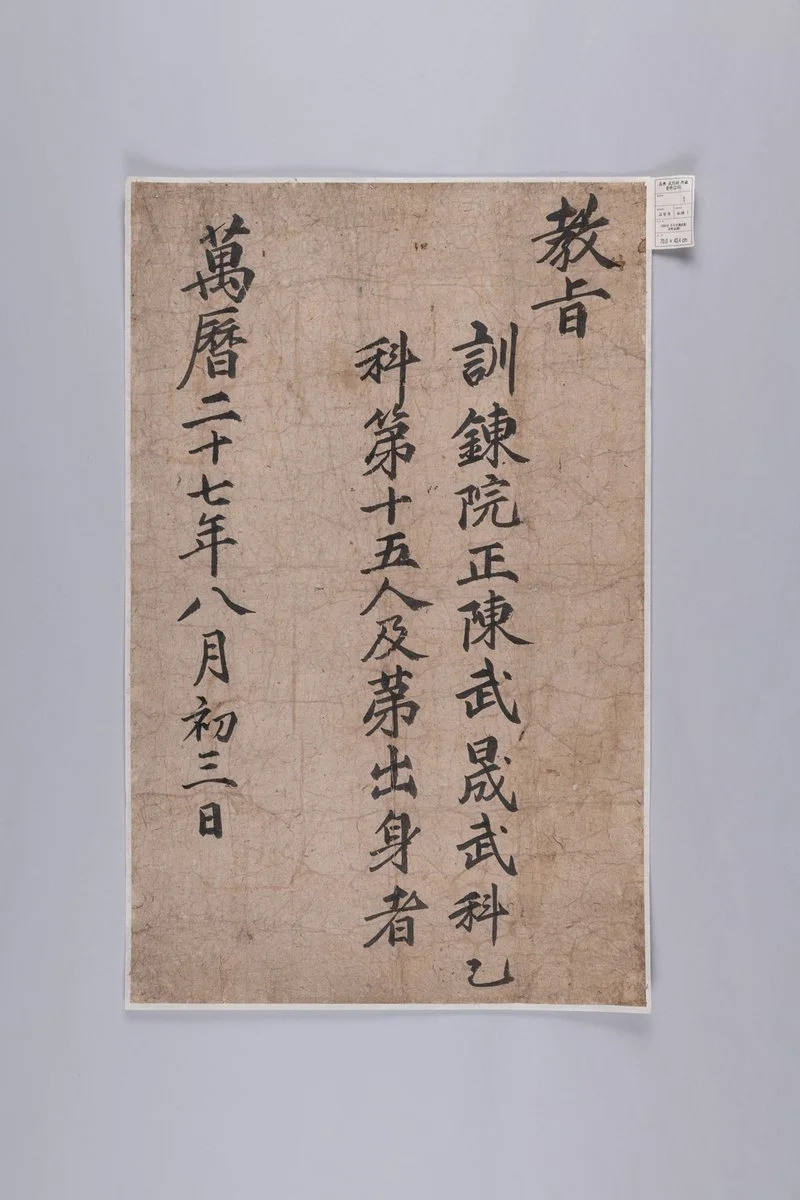
[Title] Jeollanam-do Designates New Cultural and Intangible Heritage Assets [Subtitle] Five Cultural and Intangible Heritage Items Recognized in Jeollanam-do [Lead] Jeollanam-do has newly designated five culturally significant items, including historical relics, traditional crafts, and community folk songs, as provincial heritage assets. [Body] The designation aims to systematically preserve the regional history and diversity of local lifestyles, passing down the unique cultural identity to future generations. Among the newly designated assets, 'Gohae-eup Mu-yeolsa Collection of Old Documents' has been recognized as a provincial intangible cultural heritage item. Consisting of 70 ancient documents from the family of Jinmuseong (1566-1638), a Joseon Dynasty official who was enrolled in the first rank of the Selection of Military Advisors during the Imjin War, this collection includes various types of materials such as Hongpae (official certificates), Gyoju (edicts), Hogudanja (household registers), and Seriganryu (personal letters). As a source that provides a concrete depiction of individuals and rural society that was not recorded in official documents, this collection holds significant academic value for the study of the Imjin War and the social structure of the Joseon Dynasty's military officials during the late period. In addition, O Kyung-sik, a 74-year-old master craftsman, has been recognized as the holder of the Jeollanam-do intangible heritage item 'Janggu (a type of traditional Korean drum) maker'. He continues to preserve the tradition of making traditional Korean musical instruments and received his training from his teacher, the late Kang Sa-won, who was also a Jeollanam-do janggu maker. O Kyung-sik has successfully preserved and passed down the traditional method of janggu production, playing a central role in preserving the traditional craftsmanship. Three types of community folk songs, including 'Hwasun Nanjeo Dulsori (Hwasun Nanjeo Farming Song)', 'Hwasun Naebyeong-ri Gilchamnorae (Hwasun Naebyeong-ri Carrying Song)', and 'Jindo Sofori Gilchamnorae (Jindo Sofori Carrying Song)', have also been designated as new intangible cultural heritage items. 'Hwasun Nanjeo Dulsori' is a traditional work song that vividly portrays the cooperative and bonding culture of rural communities. It has been passed down by the local residents to this day. 'Hwasun Naebyeong-ri Gilchamnorae' and 'Jindo Sofori Gilchamnorae' are carrying songs sung during the process of transporting heavy loads. They have accumulated historical value over time and have been collected as scholarly materials. In particular, Jindo's carrying song is recognized as a unique traditional folk song that actively absorbed external musical elements and localized them. Kang Hyo-seok, the head of Jeollanam-do's Cultural Enhancement Bureau, emphasized that "Jeollanam-do's heritage assets are not just relics from the past but living records of our history." He further stated, "In the future, we will actively discover hidden regional heritage assets and work with the local residents to preserve them." Along with this designation, Jeollanam-do has also proposed the designation of three more items, 'Gwangju Juk-san-ri Stone Seated Buddha Statue' and 'Philjang', as provincial cultural and intangible heritage assets. A 30-day period of preliminary designation will take place, after which the Jeollanam-do National Heritage Committee will make a final decision on their designation status.
문화2025. 12. 26. 13:07
전남도, 고흥 무열사 고문서 등 5건 문화·무형유산 지정
최초 게시: 2025. 12. 26. 13:07